- With PCOS, male hormones can make hair follicles more sensitive, so hair becomes thinner.
- The most important step is medical follow-up by your doctor or gynaecologist.
- Nutrition, exercise and stress management support your hormonal balance.
- A healthy, well-cared-for scalp is a valuable complement.
Why does PCOS make your hair fall out?
With PCOS (polycystic ovary syndrome), levels of male hormones, androgens, are often higher. Hair follicles on the scalp can be sensitive to them: they gradually shrink and produce finer, shorter hairs. The result is diffuse thinning, mainly on top and at the parting. It often comes with an oilier scalp, acne or more facial hair.
Insulin resistance, which is common with PCOS, can also raise androgen production. That is why nutrition and lifestyle play an important role.
Step 1: medical follow-up
PCOS hair loss has a hormonal cause. The most important step is therefore a conversation with your GP, gynaecologist, endocrinologist or dermatologist. They can check your hormones, iron, thyroid and vitamins and suggest treatment, for example medication that slows the effect of androgens or a topical scalp treatment. Your doctor decides which treatment suits you.
Step 2: what you can do yourself
- Nutrition: choose wholegrains, vegetables, protein and healthy fats and limit fast sugars. This helps keep your blood sugar stable.
- Exercise: regular movement improves insulin sensitivity.
- Correct deficiencies: have your iron and vitamin D checked; deficiencies are common.
- Reduce stress: stress affects your hormones and can worsen shedding.
- Gentle hair care: a mild shampoo, little heat and no tight hairstyles.
Step 3: caring for your scalp
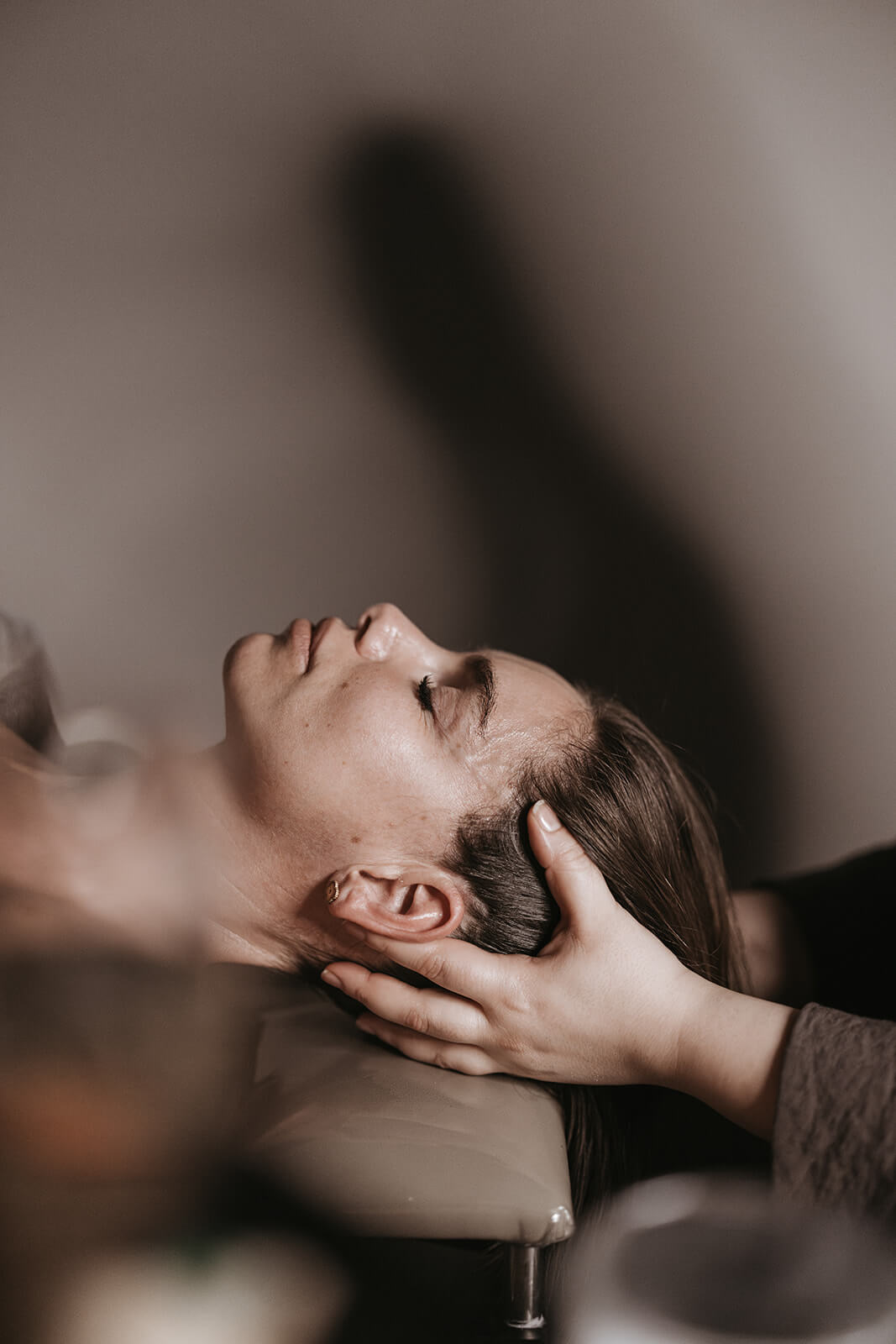
A scalp treatment does not change your hormones. But a clean, nourished scalp with good circulation does ensure your hair grows in the best possible conditions. With PCOS the scalp is often oilier; a deep, mild cleanse clears the pores and gives your hair more volume. A Japanese head massage boosts circulation and brings calm, which is good for your stress levels.
Hair grows slowly. Count on at least three to six months before you see a difference, with medical treatment as well as with care. Anyone who promises your hair will come back in a few weeks is promising too much.
How NASU can help
At NASU we support many women with PCOS, discreetly and without judgement. We start with a scalp and hair analysis and then put together a PCOS hair loss treatment or a hair regrowth cure, always alongside your medical follow-up. Also discover our hair and scalp centre.
Not sure what your scalp needs?
Take the free Scalp Check: 6 questions, 1 minute, and you get personal advice right away. Or book a scalp & hair analysis (40 min · €55).
Frequently asked questions
Is PCOS hair loss permanent?
Not necessarily. With good medical follow-up and a healthy lifestyle, shedding can slow down and hair can become fuller again. The earlier you start, the better.
Can I regrow my hair without medication?
Lifestyle and scalp care help, but with a hormonal cause medical follow-up is often needed for a clear result. Discuss the options with your doctor.
Can I have a head spa while taking medication?
Yes. Tell us which medication or scalp products you use so we can tailor the treatment.
This article is general information, not medical advice. NASU offers cosmetic scalp care and does not diagnose. With sudden, severe or persistent symptoms, please see your GP or dermatologist.